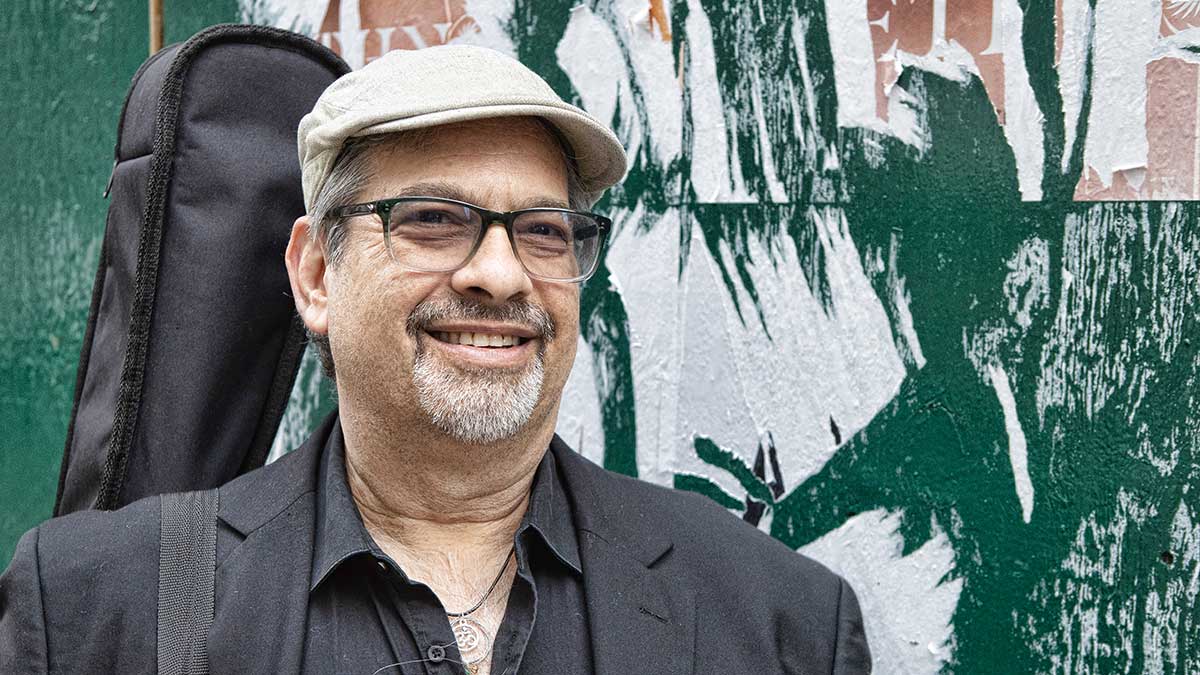
Davis singer-songwriter and guitarist Dave Nachmanoff has spent decades performing around the world, both as a solo artist and as a longtime collaborator with Al Stewart. Along the way, he’s released a dozen albums, produced recordings for other musicians, and taught songwriting in individual sessions and workshops. He also holds a Ph.D. in philosophy from UC Davis, a background that has found its way into his music.
After several years away from recording new material, Nachmanoff is preparing to release Walk This World in February 2027. Recorded with producer Scott Petito and a team of New York-based musicians, the album marks a return to songwriting after a difficult creative stretch following the pandemic.
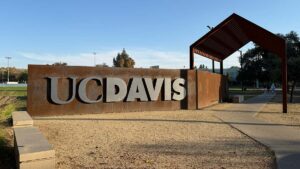
Davis audiences will have several opportunities to hear him in the coming months. On December 6, he’ll perform a solo acoustic house concert in Davis. Then, on February 6, Nachmanoff and The Usual Culprits will perform the new album in its entirety at the Winters Opera House, with proceeds benefiting Meals on Wheels Yolo County. The band will also appear at UC Davis’s Ann E. Pitzer Center on April 15.
We caught up with Dave to talk about the new record, the role music has played in his charitable work, producing and teaching other musicians, and his longtime connection to Davis.
From house concerts to major concert halls, how do different settings, audiences, and musical arrangements influence the way you perform?
Since I have been fortunate enough to play mostly gigs where I am performing my own songs for many years, the actual material is not so different. I might lean a little more into intimate ballads in a house concert, and doing a larger show in a club or theater with the band, focus on guitar solos and rocking out a bit more, but I like to bring a variety to every show, and often like to get some sort of audience participation going if it feels like the audience is up for it. For me, it’s all about connection with the audience, and the method of connection will vary depending on the setting and number of musicians.
What inspired Walk This World, and where does it fit into your previous work?
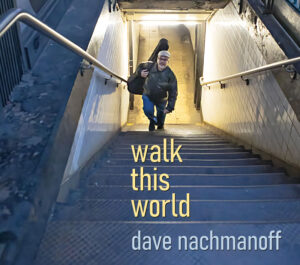 This is the first album I’ve done since the pandemic, which affected me pretty profoundly. After years of writing prolifically, I had a dry spell of several years and thought I might be finished with recording new music. The experience of making this album was really rejuvenating for me, and the two studios where we recorded (in New York City and Catskill, NY) were fantastic. I went through several rounds writing lots of material before going in to record these particular songs, which are probably the most personal collection yet, with quite a few songs relating to my family. My producer, Scott Petito, was everything I could have hoped for and put together a team of New York-based musicians, many of whom have played with some major artists. We wound up with a strong album that I think measures up to my past work really well. I guess, until it’s really out and gets some reviews, I won’t know what others think, but I am very pleased with the way it turned out.
Your album release concert will benefit Meals on Wheels Yolo County. How did your involvement with charitable causes begin, and what experiences have stood out?
For a number of years, I have been trying to find ways to use my music as a force for good in the world. Luckily, I have some very generous and creative fans and friends, and over the years, I have had sponsors who made it possible for me to put on fundraising concerts where we could donate all of the ticket sales directly to the organization that we are supporting. One of my favorite examples was a concert in Indiana, sponsored by a friend who is an eye doctor. He’d been doing volunteer work in Kenya, doing cataract surgeries and teaching doctors techniques, but needed better equipment. He partnered with a minister of a church, who hosted the concert, and somehow we raised $10,000 to buy equipment and help start work on a new clinic. It wasn’t a huge show, but someone had given a matching grant, and people were very generous. There have been some amazing examples like this, and the way that people can come together at a concert like this can be really inspiring!
Several years ago, my friends Sarah and Tom Pattison approached me with the idea of an “album” concert, where I would perform my “Spinoza’s Dream” album with The Usual Culprits (and some special guests), and we came up with the idea of turning it into a fundraiser for Meals On Wheels – Yolo County. A group of friends that I call “the Dream Team” came together with some amazing organization, filled the venue, and had such a successful event that the next year we did another show, this time with a “Local Angle” theme. That went really well, and on February 6 we will do a third show, featuring the entire new album (with full band)!
What’s your approach to producing other artists at NachVille Recording, and have any projects taken an unexpected direction?
I have fallen into the role of producer, particularly during the pandemic, and much of that work is long distance, so it involves people sending me their songs in rough form, and then building a track here (usually playing most of the instruments myself), and sending that to them for vocals. Sometimes they have a lot of ideas and suggestions for instrumentation and sometimes they leave most of that to my discretion. I can’t think of a particular example of someone that I was working with challenging me to approach music differently, but I’m sure it’s happened.
On my own albums, I prefer to work with an outside producer and in someone else’s studio where we can cut at least the basic tracks “live” with multiple players in a room. On the new album there’s a song called “Tree Frogs” and as we were working on it, I noticed a Hohner Clavinet keyboard, so I asked Cliff Carter, the keyboard player if he could do something on that, and he discovered a wah wah function that made it sound almost like a frog. Not anything we had planned, but it worked out really well.
How has your background in philosophy influenced your songwriting and the subjects you explore?
I spent a number of years kind of running from my academic background, but by “Spinoza’s Dream” I realized that it was part of who I am. The philosophical attitude is one of questioning and openness, rather than accepting common beliefs, and I think my songwriting is influenced by that tendency. I like to find some subjects to write about that lead to bigger questions, and I think since philosophy underlies all the other disciplines, it’s not hard for it to connect to the everyday topics that I write about.
Through your songwriting workshops and one-on-one teaching, what have you learned about how people write songs?
I have done quite a bit of teaching over the years, and there is always more to learn. Last year, I attended several online courses by a younger songwriter named Greta Morgan which really helped me put together the material for the new album! The one thing I find true is that there is no one way to write songs. I know my process, and sometimes try other approaches, but I know some terrific songwriters who work completely differently. For instance, I tend to start with an idea, and some sort of lyric, and almost never start with a chord progression, but that’s certainly not true of everyone. I think the biggest misconception about songwriting that I try to challenge is the idea that there is just one metric by which songs can be judged. There are many kinds of songs and songs serve many purposes in the world, so thinking about what makes a song great really depends on what that song is for.
How has living in Davis shaped your musical life, and what changes have you seen in the local music scene?
Davis is my adopted home town, and though I have not always been too connected to the local music communities due to the years I spend on the road, I appreciate that there is always a lot going here. It was a great place to raise our kids, and a nice alternative to being in a major music city like LA, NY or London, or even a place like Austin or New Orleans that are packed with musicians. There are certainly some incredibly talented and hard-working musicians in almost every genre based here in town. The “scene” has changed quite a bit over the years and sadly, many live music venues have closed in recent years, though usually new ones seem to emerge when there is a need. Playing with The Usual Culprits over the last few years has put me a little more in touch with the local scene since that was never really a touring band.
What are you finding most creatively rewarding these days, and what would you like to explore next?
All of the things you mention are rewarding, each in their own way, and getting back to playing live, and writing again, have been a real joy. Right at the moment my focus has been on getting the new album out and learning the songs to be prepared for upcoming shows. I do love collaborating with other musicians, so I’m excited to see if I can put some larger shows together with an expanded version of the Usual Culprits, and do some in-the-round shows with other songwriters.
For more information about Dave Nachmanoff, his music and upcoming performances, visit davenach.com.